How to Design Event Schedules That Respect Attendee Well-Being
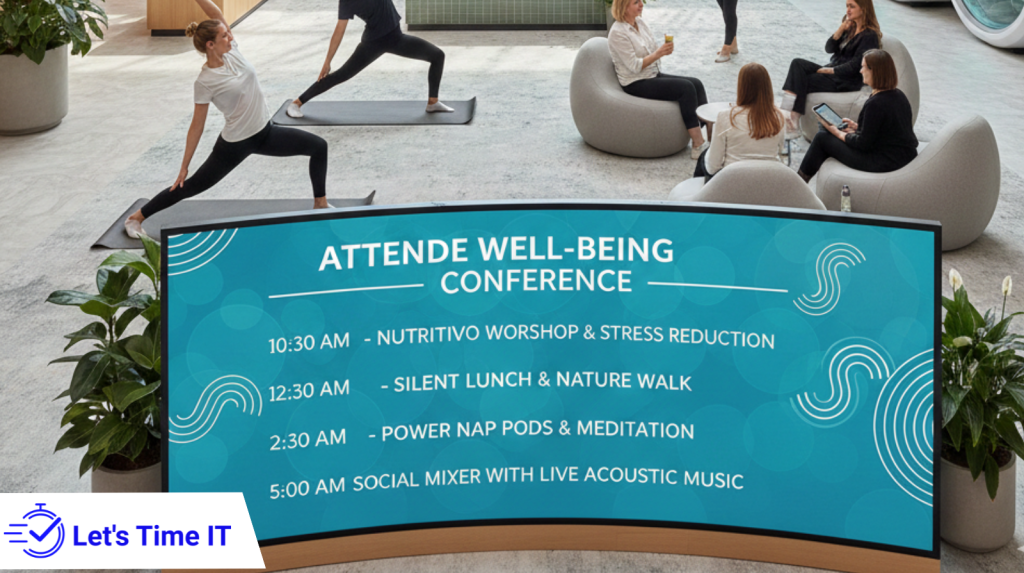
How to Design Event Schedules That Respect Attendee Well-Being
In today’s always-on event landscape, event schedules, audience expectations have changed. Long sessions, back-to-back panels, and overloaded agendas no longer impress attendees, they exhaust them. Whether you are managing a global conference, corporate meeting, or virtual webinar, building a human-centered schedule is now essential.
Modern organizers are rethinking how they use tools like a remote-controlled countdown timer, a Countdown timer for webinar, or a Conference timer to maintain structure without creating stress. From a Stage timer at live events to a Webinar timer for virtual sessions, smart timing helps balance energy, engagement, and well-being.
This guide will walk you through practical, actionable steps to design event schedules that prioritize attendee wellness, while still delivering business impact.
Why Attendee Well-Being Is Now a Strategic Priority
Event fatigue is real. Research across industry publications shows that attention spans drop significantly after 45–60 minutes of continuous listening. Long virtual sessions increase cognitive overload, while packed in-person agendas reduce networking quality.
For marketing leaders, CXOs, webinar operations teams, and delegate generation teams, the stakes are high:
- Lower engagement affects brand perception
- Fatigued audiences skip sessions
- Reduced attention lowers sponsor ROI
- Poor experience impacts future registrations
Designing for well-being is no longer a “nice to have.” It’s a competitive advantage.
The Science Behind Attention and Event Fatigue
Before designing a better schedule, understand how the brain works in event environments.
1. Cognitive Load
The brain can only process a limited amount of new information at once. Overloading agendas reduces retention.
2. Decision Fatigue
Too many sessions without breaks drain mental energy.
3. Physical Fatigue (In-Person Events)
Standing, walking between halls, and constant stimulation exhaust attendees.
4. Screen Fatigue (Virtual & Hybrid)
Long virtual sessions cause eye strain and reduced focus.
Smart timing, supported by structured visual cues like a Countdown timer for sessions, helps maintain flow without overwhelming attendees.
Core Principles for Designing Well-Balanced Event Schedules
1. Follow the 45–50 Minute Rule
Instead of scheduling 60-minute sessions, design 45-minute content blocks with 10–15 minute breaks.
Why it works:
- Maintains attention span
- Allows reflection
- Encourages networking
- Reduces burnout
A discreet Countdown timer for presentation helps speakers stay within time without awkward interruptions.
2. Build Strategic Energy Peaks and Recovery Windows
Your agenda should feel like a wave, not a marathon.
Morning: High-energy keynote
Midday: Interactive or networking sessions
Afternoon: Lighter content or workshops
Late Afternoon: Closing summary or inspirational talk
Using a Timer for speakers ensures each session respects its allocated slot, preventing delays that compress break times.
3. Protect Breaks Like They Are Sessions
Most event delays eat into break times. That is one of the biggest mistakes organizers make.
Breaks are not optional. They are:
- Networking opportunities
- Sponsor engagement windows
- Mental reset moments
A visible yet subtle Countdown timer for stage helps keep transitions smooth so breaks are never sacrificed.
4. Limit Parallel Session Overload
Too many simultaneous tracks create decision stress.
Instead:
- Curate fewer, higher-quality tracks
- Offer on-demand replays
- Group sessions by theme
This reduces anxiety and improves session satisfaction scores.
Designing Speaker-Friendly Schedules
Speakers play a critical role in audience well-being. When presenters exceed time limits, attendees feel rushed and overwhelmed.
Use Structured Timing Cues
Providing a countdown timer for presenters ensures:
- Clear visual awareness
- No awkward interruptions
- Professional pacing
- Smooth transitions
In physical events, a Stage timer positioned discreetly helps speakers stay aligned without distracting attendees.
Brief Speakers About Wellness-First Scheduling
Include these in speaker guidelines:
- Respect time boundaries
- Avoid information overload
- Add audience interaction every 10–15 minutes
- Leave 5 minutes for reflection or Q&A
A Timer for presentation keeps the rhythm intact without manual monitoring.
Designing Virtual and Hybrid Events for Well-Being
Virtual fatigue requires even more thoughtful scheduling.
Shorter Sessions, More Interaction
For webinars:
- Keep sessions between 30–45 minutes
- Add polls or Q&A segments
- Provide screen breaks
Using a Countdown timer for webinar ensures sessions don’t unintentionally extend beyond attention thresholds.
Hybrid Events: Timing Synchronization Matters
Hybrid formats require precise coordination between:
- On-site stage management
- Virtual broadcast teams
- Remote speakers
A remote-controlled countdown timer allows organizers to manage timing discreetly across multiple rooms or streams without visible disruption.
Adding Countdown Timers Across Platforms (Detailed Guide)
Timing discipline becomes scalable when you implement timers strategically.
For In-Person Conferences
Implementation Steps:
- Install display screens visible to speakers only.
- Configure session durations in advance.
- Use centralized control for real-time adjustments.
- Train AV teams on timer visibility protocols.
A well-configured Conference timer ensures no session exceeds its slot.
For Webinars and Virtual Events
Implementation Steps:
- Embed a Webinar timer within presenter view only.
- Sync timers with streaming software.
- Automate start and stop triggers.
- Provide color alerts (green → yellow → red).
This supports session discipline while protecting audience comfort.
For Multi-Track Conferences
Implementation Steps:
- Centralize timer control dashboard.
- Assign session durations per room.
- Enable remote overrides.
- Monitor all sessions in real-time.
A Countdown timer for speakers ensures consistent pacing across halls.
For Presentations and Keynotes
Implementation Steps:
- Pre-configure keynote duration.
- Provide rehearsal timer access.
- Offer speaker-only countdown display.
- Avoid audience-facing time pressure visuals.
Using a Countdown timer for presenters helps maintain professionalism without visible pressure.
Balancing Business Goals with Wellness
Marketing and CXO leaders often worry:
“Will shorter sessions reduce value?”
The opposite is true.
Well-paced agendas:
- Improve retention
- Increase audience satisfaction
- Boost sponsor engagement
- Encourage repeat attendance
Time discipline improves brand perception.
A structured Timer for presenters reinforces professionalism while protecting attendee energy.
Creating Wellness-Focused Agenda Templates
Here’s a sample structure for a 1-day conference:
09:00 – 09:45 Keynote
09:45 – 10:00 Break
10:00 – 10:45 Session 1
10:45 – 11:00 Break
11:00 – 11:45 Session 2
11:45 – 12:45 Lunch
12:45 – 13:30 Panel Discussion
13:30 – 13:45 Break
13:45 – 14:30 Workshop
14:30 – 14:45 Break
14:45 – 15:30 Closing
Using a Countdown timer for sessions ensures no segment overlaps into recovery periods.
Measuring Schedule Success
To evaluate well-being impact, track:
- Session attendance drop-off rates
- Average watch time (virtual events)
- Post-event satisfaction scores
- Break engagement metrics
- Sponsor interaction rates
If attendees remain engaged throughout the day, your schedule is working.
The Role of Smart Timing Tools in Scaling Events
For growing event teams, manual timing becomes unsustainable.
Scalable timing solutions allow:
- Centralized session control
- Discreet speaker prompts
- Real-time adjustments
- Multi-location synchronization
Let’s Time IT enables organizers to implement countdown systems at scale while remaining invisible to attendees, ensuring structure without pressure.
Whether you need a Countdown timer for stage or a synchronized Timer for speakers, structured timing enhances event quality without compromising attendee comfort.
Well-Being Is the New Event Standard
Designing event schedules that respect attendee well-being is no longer optional. It’s a strategic necessity.
Thoughtful session lengths, protected breaks, controlled pacing, and structured timing tools create events that feel energizing, not exhausting.
When organizers use tools like a Countdown timer for presentation or a centrally managed Conference timer, they ensure professionalism while prioritizing human experience.
The future of events belongs to those who understand one truth:
Respect people’s time.
Respect their energy.
Respect their attention.
And your events will stand out, not because they are longer, but because they are smarter.