How a Countdown Timer Can Transform Any Event: From Webinars to Live Stages
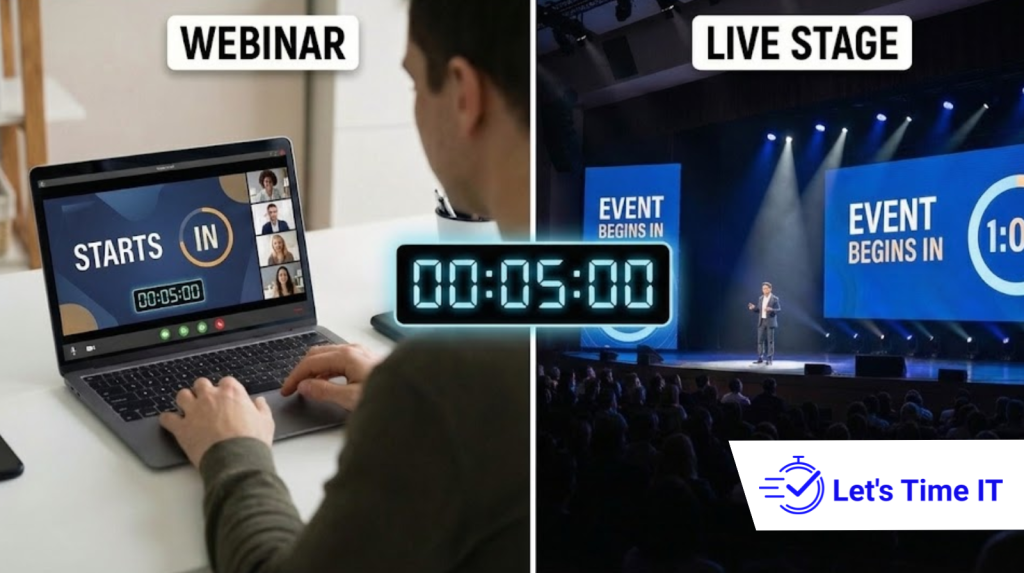
How a Countdown Timer Can Transform Any Event: From Webinars to Live Stages
Timing is one of the most underrated yet essential parts of any event. Whether you’re organizing a webinar, hosting a multi-stage conference, or running a live presentation, the way you manage time shapes the entire experience for speakers, audiences, webinars to live stages and production teams.
Right from the introduction, timing tools such as a conference timer, stage timer, countdown timer for presentation, and timer for presentation have become event must-haves. Many organizers also depend on a countdown timer for stage, countdown timer for events, and a simple countdown timer to ensure sessions stay on track. These tools have changed how events are planned and delivered, helping speakers perform confidently and audiences stay engaged.
In this blog, we’ll explore how countdown timers transform events across formats, why timing matters more than ever, and how organizers can practically integrate timers across platforms. We’ll also reflect on Let’s Time IT’s viewpoint on timing at scale discreet, synchronized, and effortless.
Why Timing Matters More Than Ever in Modern Events
Event formats have changed dramatically in the last few years. Webinars now attract global audiences. Corporate events run with tight schedules. Conferences operate multiple halls at once. With so many moving pieces, one delayed session can disrupt the entire agenda.
That’s why timing is no longer optional, it’s essential.
Today’s audiences have shorter attention spans and higher expectations. They want sessions that start and end on time. They appreciate crisp transitions and speakers who respect the schedule. When timing is well managed, the entire event feels more professional.
Speakers also depend on clear timing. Without a visible countdown, they may speak too slowly in the beginning and rush toward the end. A structured timing system helps them pace their message naturally, without surprise interruptions.
From an organizer’s perspective, timing brings order to chaos. It keeps the event team aligned, reduces last-minute pressure, and prevents overlapping sessions. When time is well managed backstage, the audience experiences a smooth and polished event onstage.
Let’s Time IT’s viewpoint here is simple: timing should reduce stress, not add to it. It should support organizers quietly in the background while providing confidence to speakers and structure to the overall event.
How Countdown Timers Improve Speaker Performance
Every speaker experienced new benefits from knowing exactly how much time they have left. A countdown creates clarity. It acts like a guide that helps them shape their storytelling and keep the session focused.
When speakers can see their remaining time:
- They pace themselves better
- They avoid dragging one topic for too long
- They build their presentation with natural rhythm
- They deliver stronger conclusions because they know when to wrap up
Many speakers admit that having a timer makes them feel more confident. They don’t have to guess. They don’t wait for someone backstage to signal them. Instead, they stay in control throughout their session.
This confidence directly improves the audience experience. A well-timed presentation feels polished, structured, and engaging.
How Countdown Timers Enhance Audience Experience
Audiences trust events more when sessions run on time. When organizers follow a consistent schedule, attendees feel respected. They know exactly when a session starts, how long it will last, and what comes next.
A well-timed event also helps them stay mentally fresh. If a session goes on too long, attention drops. People begin checking emails or waiting for the break. With proper timing:
- Sessions remain crisp
- Breaks arrive exactly when expected
- Transitions feel smooth
- Audience engagement stays high
Timing is not just about the speakers,it’s equally about the people watching. Events that run with clarity and precision leave a lasting positive impression.
Why Production Teams Rely on Timers
Behind every successful event is a production team working hard to make everything look effortless. They manage lights, sound, stage cues, backstage communication, and speaker transitions. With so much responsibility, even a small delay can create a ripple effect.
Countdown timers give production teams control over the flow. They no longer need to manually remind speakers to wrap up. They avoid rushed transitions. They reduce backstage communication chaos.
Timers create a predictable rhythm, allowing the entire event to move forward smoothly.
Different Types of Timers and Why They Matter
The Conference Timer
Large events often run multiple sessions across different halls. A conference timer helps keep all these sessions aligned. Even if each hall has a different speaker or topic, the event stays synchronized. It supports moderators, panelists, and organizers in managing time easily.
The Stage Timer
A stage timer is designed specifically for speakers who are performing live onstage. It works discreetly, often placed at the edge of the stage or hidden inside a confidence monitor. The goal is to help speakers maintain flow without distracting the audience.
The Countdown Timer for Presentation Sessions
This timer supports structured presentations, especially those with detailed content. Speakers can easily track how much time they have for each section, helping them maintain clarity and pace.
The Timer for Presentation Tools
This timer format is used for slide decks, pitches, business reviews, and training programs. It’s ideal for internal corporate events as well as public-facing conferences.
The Countdown Timer for Stage Events
These timers support ceremonies, awards, product launches, and large live events where precision matters. They help backstage teams run everything exactly on cue.
The Countdown Timer for Events
This timer works across all event types virtual, hybrid, or physical ensuring sessions begin and end consistently.
Each of these timers plays a different role, but together, they create a professional, seamless event flow.
Timers for Different Event Formats
Webinars and Virtual Events
Timing becomes even more complicated when speakers join from different locations or time zones. A countdown gives remote speakers a sense of structure. It helps them know when to begin, when to pause, and when to conclude. It also helps webinar hosts manage transitions between multiple speakers.
A remote-controlled countdown timer becomes especially useful here, ensuring the entire session stays in sync across virtual rooms.
Hybrid Events
Hybrid events combine in-person and online elements. This makes timing even more important. A delay on the physical stage can affect the virtual audience, and vice versa. Countdown tools keep both environments aligned.
Large Conferences
In a large conference, sessions may run simultaneously. Without a timing system, entire tracks can fall off schedule. With timers in place, moderators and speakers stay disciplined, ensuring the event remains consistent.
Corporate Meetings & Trainings
These sessions also require clear timing because they usually follow structured agendas. A countdown helps teams remain focused and avoid unnecessary diversions.
How to Add Timers Across Different Platforms
This is one of the most practical parts of the blog, helping organizers apply timing tools across environments.
Using “Add to Event” or Calendar-Based Timing
When organizers use “add to event” features or similar tools, they can attach a preset countdown to each session. For example, if a meeting is scheduled from 3:00 PM to 3:45 PM, the timer can automatically begin at start time. A countdown timer for addevent option helps speakers prepare in advance.
Embedding Timers in Presentations
Timers can be embedded directly into slides or displayed backstage. This ensures speakers always have a visible countdown without turning to a separate device.
Using Timers in Webinar Platforms
Some webinar platforms allow timers to be shown only to speakers, keeping audiences focused on content. Organizers can run the timer remotely and adjust it if needed.
Using Timers on Stage
For physical events, timers can be integrated into confidence monitors, placed on stands, or shown on backstage screens. The goal is to keep them discreet so audiences remain unaware of the behind-the-scenes flow.
Managing Timers Across Multiple Stages
For events with multiple rooms or stages, organizers often run several timers simultaneously. From Let’s Time IT’s viewpoint, this kind of multi-session timing should be scalable, synchronized, and easy to manage from one place.
The Psychology Behind Effective Timing
Speakers Perform Better
When speakers have structure, they deliver their best work. They don’t worry about exceeding time or cutting content unexpectedly.
Audiences Stay Engaged
Timing affects energy levels. Shorter, well-paced sessions keep audiences active and interested. Predictable timing helps them feel comfortable throughout the event.
Organizers Work with Confidence
A well-timed event creates a professional atmosphere. It reduces stress and ensures the entire event runs exactly as planned.
Common Timing Mistakes Organizers Make
Even experienced event teams make mistakes, such as:
- Relying on verbal signals instead of visible timers
- Forgetting to reset timers between sessions
- Placing the timer where speakers cannot see it
- Using separate timers for virtual and physical rooms
- Not planning enough buffer time between sessions
With a structured timing system, these challenges become easier to manage.
Let’s Time IT’s Perspective on Modern Event Timing
Let’s Time IT believes that timing should be consistent, scalable, and discreet. Organizers should not have to manually track time for each session. Speakers should not rely on hand signals. Production teams should not feel pressured to constantly intervene.
Timing should feel effortless and invisible working in the background to support a smooth and professional event. Whether an event has five sessions or fifty, whether speakers are onstage or remote, timing should remain reliable.
This viewpoint reflects the growing trend in the industry: moving from manual processes to synchronized timing systems that support organizers at every stage.
Conclusion: The Future of Event Timing
From webinars to live stages, countdown timers have become essential event tools. They help speakers perform confidently, keep audiences engaged, and allow organizers to manage sessions with clarity and ease. Whether it’s a multi-stage conference or a simple internal meeting, timing can transform the entire experience.
As events continue to grow in scale and complexity, timing will remain one of the most important foundations of successful delivery. From Let’s Time IT’s perspective, the future of event timing is clear: it must be simple, synchronized, and discreet.
A good countdown timer doesn’t just track minutes, it shapes the entire event, making every session smoother, sharper, and more impactful.