How Hybrid and “Phygital” Events Will Evolve in 2026
How Hybrid and “Phygital” Events Will Evolve in 2026
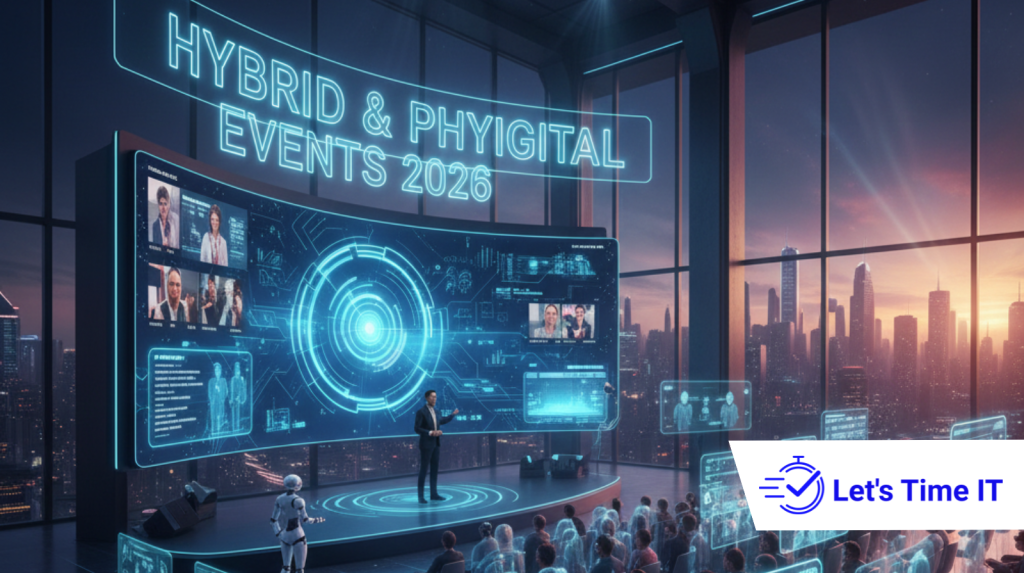
Events are no longer purely physical or fully virtual. By 2026, most conferences, meetings, and webinars will live in a blended space where digital and in-person experiences operate together in real time. This evolution often called hybrid or phygital is reshaping how organizers plan, execute, and measure events.
In this environment, timing becomes critical. Whether it’s a countdown timer for presentation, a timer for presentation, a stage timer, a timer for speakers, a webinar timer, a countdown timer for presenters, or a countdown timer for webinar, keeping everyone aligned across locations is no longer optional, it’s essential.
Tools like Let’s Time IT are becoming a quiet backbone of modern events, helping teams manage time precisely and discreetly as experiences become more complex.
What “Hybrid” and “Phygital” Really Mean in 2026
In 2026, hybrid events are not just live streams with a physical audience. They are synchronized experiences where:
- In-room attendees
- Remote speakers
- Virtual audiences
- Event operations teams
all move together on a shared timeline.
Phygital events go one step further by blending physical cues (like stage transitions) with digital signals (like timers and on-screen prompts), ensuring consistency across formats.
Why Timing Will Define Successful Events Going Forward
As events scale across locations and time zones, poor time management creates friction. Delays, overruns, and speaker misalignment affect both audience experience and brand perception.
Organizers are now expected to:
- Start sessions exactly on time
- Keep speakers within allocated slots
- Coordinate transitions across physical and digital stages
- Maintain audience attention spans
This is why controlled, visible timing mechanisms are becoming a standard operational layer.
The Rise of Remote-Controlled Event Infrastructure
One of the biggest changes in 2026 is the shift toward centrally managed event tools.
A remote-controlled countdown timer allows event teams to manage time from a single control point, even when speakers and moderators are spread across different locations. This removes the dependency on individual speakers tracking their own time and reduces human error.
For hybrid and phygital formats, this kind of centralized control ensures consistency across stages, streams, and sessions.
How Countdown Timers Fit Into Modern Event Design
Timers are no longer just for speakers, they are part of the experience design.
A countdown timer for addevent or add to event workflows helps align pre-event communication, live sessions, and transitions. When used correctly, timers:
- Signal professionalism
- Reduce uncertainty for speakers
- Improve session flow
- Help audiences know what to expect next
They also allow organizers to run tight agendas without constantly interrupting speakers verbally.
The Changing Role of Speakers in Hybrid Events
Speakers in 2026 are often:
- Presenting remotely
- Switching between live and virtual audiences
- Managing multiple content formats
They can’t always rely on physical stage cues. Visual timing support becomes critical, especially when speakers are not physically present at the venue.
Clear, visible timing removes stress and allows speakers to focus on content rather than logistics.
Why Discreet Timing Tools Matter More Than Ever
Modern events prioritize experience. Loud alerts or intrusive interruptions break flow and reduce engagement.
Discreet timers visible only to speakers or moderators help maintain control without disrupting the audience. This approach is especially valuable in executive meetings, CXO forums, and high-stakes conferences.
Let’s Time IT fits naturally into this model by enabling subtle yet precise time control without drawing attention away from the event itself.
Platform Agnostic Event Operations in 2026
Another major shift is platform diversity. Events now run across:
- Physical venues
- Webinar platforms
- Streaming tools
- Embedded event pages
Timing tools must work independently of these platforms. Organizers can no longer afford tools that only work in one environment.
This is why standalone, flexible timing systems are becoming a core part of event tech stacks.
How Organizers Can Prepare for 2026 Starting Now
To stay ahead, event teams should:
- Design agendas with hybrid delivery in mind
- Standardize timing across formats
- Train speakers on visual timing cues
- Centralize time control for all sessions
These steps reduce operational stress and improve consistency across events.
Where Let’s Time IT Fits Into the 2026 Event Stack
As hybrid and phygital events mature, tools must support scale, discretion, and reliability.
Let’s Time IT helps organizers:
- Manage timers centrally
- Support multiple sessions and speakers
- Maintain consistent timing across formats
- Reduce speaker overruns without confrontation
It works quietly in the background, allowing teams to focus on experience rather than enforcement.
The Future of Event Experiences Is Structured but Flexible
The most successful events in 2026 will feel seamless to attendees, even though they are operationally complex behind the scenes.
Hybrid and phygital formats demand:
- Strong coordination
- Precise timing
- Invisible operational control
Timers are no longer optional utilities, they are part of how modern events function.
Time Will Be the Invisible Backbone of 2026 Events
Hybrid and phygital events are evolving fast in 2026, and expectations are higher than ever. Audiences expect smooth transitions, speakers expect support, and organizers are expected to deliver flawless execution.
By adopting better timing practices and tools like Let’s Time IT, event teams can future-proof their operations and confidently manage events at scale. In 2026, the best-run events won’t just look good, they’ll run on time.